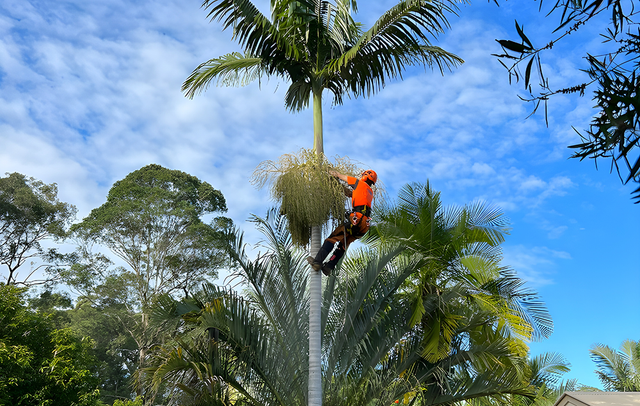

I work on a four-person tree crew that handles pruning, removals, storm cleanup, and difficult backyard access jobs across Central New Jersey. Over the years, I have learned that the best tree work often looks uneventful because the planning was done correctly before the first saw ever touched wood. A healthy oak over a driveway and a damaged maple beside a garage may both look like simple cutting jobs from the ground, yet they demand completely different approaches. I judge a tree service by how carefully the crew reads those differences.
I Start by Looking at the Tree and Everything Around It
I rarely make a serious recommendation after looking only at the trunk. I walk around the property, look up through the crown, inspect major unions, and pay close attention to nearby roofs, utility lines, fences, sheds, and neighboring yards. On a typical residential property, I may spend 15 or 20 minutes studying access before deciding where ropes, equipment, and brush should move. That short inspection can prevent hours of trouble later.
I once looked at a mature maple that a homeowner assumed needed complete removal because several large limbs were hanging over the rear of the house. After checking the trunk and main structure, I found that selective pruning was a more sensible option than taking the whole tree down. I would rather preserve a sound tree than sell someone a larger job simply because removal pays more. Good judgment matters here.
Central New Jersey properties can make access surprisingly complicated. I have worked around narrow side gates, patios, swimming pools, detached garages, gardens, and fences that left less than 4 feet of usable space in certain areas. In those situations, I plan the movement of every major limb before cutting it loose because there may be no safe place for mistakes. The cutting is often the easy part.
I Pay Attention to How a Tree Company Plans the Work
I can usually tell a lot about a tree company by the questions its crew asks before starting. I want to hear discussion about drop zones, climbing points, rigging, equipment access, nearby structures, and what will happen with the wood after the job. One resource I would consider while comparing local options is Best Tree Service in Central New Jersey because homeowners should have a clear local reference point when reviewing tree care services. I still believe every property deserves an individual assessment rather than a one-size-fits-all recommendation.
For a straightforward front-yard removal, I may be able to use equipment that keeps most cutting and lowering away from the house. A backyard tree behind a 6-foot fence is another matter, especially if the trunk leans toward a roof or neighboring structure. I have worked on trees where every section had to be tied, cut, lowered, and guided by hand because dropping material freely was not an option. Those jobs are slower for a reason.
I also watch how a crew prepares the ground before major cutting begins. Moving patio furniture, protecting vulnerable surfaces, identifying sprinkler heads, and deciding where larger trunk sections will land can save a homeowner from unnecessary property damage. Last summer, I worked at a home where decorative pavers ran almost directly beneath the tree, so we used heavy protection before lowering several sections. Preparation took extra time, but replacing damaged stone would have taken much longer.
Pruning Should Have a Clear Reason Behind It
I never like hearing a pruning plan described simply as cutting the tree back. I want to know which limbs are being removed and why they are being removed. Sometimes I am reducing weight on a long lateral branch, while another job may involve clearing deadwood or creating reasonable separation from a roof. Cutting without a purpose can leave an expensive mess.
I have seen mature trees that were repeatedly cut too hard because someone wanted them made smaller every few years. The result can be dense regrowth, poor branch attachment, and a crown that becomes harder to manage rather than easier. On one property, I counted more than a dozen vigorous shoots developing around several old topping cuts. I explained that correcting years of poor pruning would require patience rather than another aggressive round of cutting.
I prefer to work gradually on established trees whenever their condition allows it. Removing too much live growth in one visit can change how the tree responds, so I consider species, age, structure, and the homeowner's actual goal before recommending a cut. If a branch is 8 inches thick and extends over a roof, I may reduce or remove it differently than a smaller branch growing toward an open lawn. Context controls the decision.
Tree Removal Is Mostly About Controlling Space
People often imagine tree removal as someone climbing up and cutting the tree into pieces. I think of it more as a controlled movement problem where every piece needs a safe destination. A 40-foot tree in an open field gives me many options, while a similar tree between two houses may require ropes, blocks, careful lowering, and much smaller sections. Same tree height, different job.
I worked on a backyard removal one spring where the usable landing area was barely wider than a small pickup truck. The tree itself was not unusually large, but a shed sat on one side and a neighboring fence ran close to the other. I lowered branches through a narrow opening while the ground crew kept ropes organized and moved brush out before the next section came down. That job reminded me why access can matter as much as trunk diameter.
I also think homeowners should understand that removal does not always mean the property is finished afterward. The stump may remain unless grinding is part of the work, and large surface roots can still affect future planting or construction plans. When someone tells me they want to install a patio where a tree currently stands, I ask about that plan before deciding how deeply the stump should be addressed. A few minutes of conversation can change the scope of the job.
Storm Damage Requires a Different Kind of Patience
Storm calls can create pressure because people naturally want dangerous-looking branches removed immediately. I still inspect the tree carefully before putting anyone underneath it. Hanging limbs, split unions, bent trunks, and partially uprooted root systems can move in ways that are difficult to predict from the ground. A branch weighing several hundred pounds does not need to fall far to cause serious damage.
After one strong storm season, I visited a property where a large limb had split but remained tangled high in another part of the crown. From one angle it looked stable, yet from the opposite side I could see that most of its weight was resting on two smaller branches. I changed the climbing route and used a controlled lowering setup instead of approaching it from beneath. Five extra minutes of inspection changed the entire plan.
I also separate immediate hazards from damage that can wait until conditions improve. If a broken limb is suspended over a driveway or entryway, I treat that differently from smaller debris lodged over an unused corner of the yard. Wet soil, wind, darkness, and unstable trees can make rushed work more dangerous than waiting for a safer setup. I would rather explain a delay than create another emergency.
I Judge the Crew by What Happens After the Cutting
I consider cleanup part of professional tree work, not an optional detail. Brush piles, scattered sawdust, torn turf, and heavy trunk sections can leave a property looking worse than the original tree problem if nobody plans for cleanup. On many jobs, my ground crew spends nearly as much time moving material as I spend cutting. That division of labor keeps the work area controlled.
I also discuss wood and chips before starting because homeowners have different preferences. Some want everything hauled away, while others ask me to leave manageable firewood or a pile of chips for garden paths. A trunk that produces 20 or more rounds can take up much more space than people expect once it is on the ground. I prefer settling that question before the first cut.
Small signs of care matter to me. I notice whether gates are closed, whether branches are dragged across delicate plantings, and whether the crew checks the yard one last time before leaving. I have returned to jobs simply to rake a patch of debris that was hidden beneath equipment during the initial cleanup. That may sound minor, but homeowners remember how their property was treated.
I Would Choose Skill and Judgment Over a Cheap Number
I understand why price matters because tree work can become a substantial household expense. Still, I do not compare estimates by looking only at the number at the bottom of the page. I want to understand what is included, how the crew intends to complete the work, what happens to the debris, and whether stump work is part of the agreement. Two quotes separated by several hundred dollars may describe very different jobs.
A homeowner once showed me a lower estimate that appeared attractive until we read the details together. It covered removing the tree but left the trunk wood stacked on the property and did not include stump grinding. My quote included hauling the material and finishing the area in a way that matched what the homeowner actually wanted. Once we compared the scope rather than the price alone, the difference made sense.
I have spent enough time in trees to know that good equipment cannot replace judgment, and a polished truck does not tell me how carefully a crew will work beside someone's home. I look for people who inspect first, explain their plan clearly, and change that plan when the condition of the tree demands it. For Central New Jersey homeowners, I believe that combination of practical skill and careful decision-making is what separates dependable tree service from ordinary cutting. I would choose the crew that makes me confident before the saw starts.
I have spent years climbing, pruning, dismantling, and assessing trees around bayside properties in southeast Queensland, where salty air, summer storms, tight yards, and fast-growing vegetation can make tree work surprisingly technical. I work from ropes and harnesses on many jobs, but I also spend a lot of time on the ground studying trunks, root zones, nearby structures, and the direction a tree naturally carries its weight. Redland Bay properties can change quickly as gardens mature and homes are extended. I have learned that good arborist work usually starts long before anyone switches on a chainsaw.
I Start With the Tree, Not the Chainsaw
My first job is usually observation. I walk around the tree, look upward through the crown, check where major limbs join the trunk, and inspect the ground around the base before deciding what work makes sense. A tree that looks messy from the patio may simply need selective pruning rather than heavy cutting. I would rather remove 5 carefully chosen branches than cut 25 branches without a clear reason.
I pay close attention to old wounds because they often tell me how the tree has been managed before. Large pruning cuts, torn limbs, cavities, dead branch stubs, and poorly formed unions can influence how I plan a climb and where I position my ropes. On one property last summer, I found an old limb failure hidden behind thick foliage that changed my entire approach to the job. That changed the plan.
Root areas deserve the same attention. I regularly see trees growing beside driveways, retaining walls, sheds, pools, fences, and recently landscaped garden beds, so I cannot judge the crown without considering what is happening below it. Excavation close to the trunk can matter just as much as a branch hanging toward a roof. I have walked away from proposed pruning jobs and recommended further assessment because the bigger concern was around the root zone rather than the canopy.
I also consider species and growth habit. Some trees naturally form wide crowns, while others develop upright stems that can become crowded as they mature. Knowing the difference helps me avoid turning normal growth into an unnecessary problem. I want every cut to have a purpose.
How I Decide Between Pruning and Removal
Homeowners often call me expecting one solution and end up choosing another after we inspect the tree together. I might arrive to discuss removal, then find that careful crown reduction or deadwood removal addresses the main concern without taking the whole tree down. The opposite happens as well, particularly where structural defects are more serious than they appear from ground level. I base that discussion on the individual tree, its surroundings, and what the owner is trying to achieve.
For local property owners wanting experienced help, I often suggest arranging an assessment with an arborist Redland Bay service before deciding how much work the tree actually needs. A proper look at branch structure, access, nearby buildings, and overall condition can prevent an owner from paying for unnecessary cutting. I have seen people request complete removal when two problem limbs were causing most of their concern. A site inspection usually makes the options much clearer.
Removal becomes more practical for me when the whole tree presents a problem that pruning cannot reasonably correct. That might involve substantial decline, severe structural damage, an unsuitable position beside construction, or repeated failures from major limbs. I do not treat one dead branch as proof that an entire mature tree should disappear. I look for the pattern.
I once inspected a backyard tree where the owner was worried because leaves and small twigs kept landing in the pool. Removing the tree would have solved the debris problem, but it would also have removed a large amount of afternoon shade from the western side of the house. We discussed pruning a limited number of overhanging branches instead. Several months later, the owner called about another tree rather than asking to remove the first one.
Storm Damage Changes the Way I Work
Storm work is different from routine pruning because damaged trees can hold tension in places that are difficult to see. A split branch may still be attached by fibres, while another limb can be resting against it and shifting weight through the crown. I never assume a hanging branch will behave like a normal branch once I start cutting. Even a piece only 2 metres long can swing unexpectedly if its weight is loaded sideways.
I slow down around storm damage. Before climbing, I study the likely failure points from several angles and decide whether ropes, lowering equipment, a platform, or another access method would give me better control. If a branch is sitting above a roof, fence, vehicle area, or neighbour's yard, I plan its movement before making the first cut. That preparation can take longer than the cutting itself.
One storm season, I attended a property where a substantial upper limb had cracked and settled into another section of the canopy. From the driveway it looked stable, but once I viewed it from the opposite side I could see that very little sound wood remained at the break. I repositioned the work zone and dismantled it in smaller sections instead of attempting a larger cut. The slower method gave me far more control.
After bad weather, homeowners sometimes focus on the branch already on the ground. I also examine what remains above because the original failure may have damaged connected limbs or opened the crown to different wind loading. A fresh tear can leave exposed wood and uneven weight distribution that should be considered before the site is treated as finished. I prefer dealing with that during the same assessment rather than receiving another emergency call a week later.
Access Can Decide How Difficult a Job Becomes
Tree size matters, but access often has a greater effect on how I organise the work. A medium tree in an open front yard can be straightforward, while a similar tree squeezed behind a house with a narrow side gate may require careful rigging for every branch. I have worked on properties where equipment access was limited to a passage barely wider than a wheelbarrow. Those jobs demand patience.
Before starting, I check gates, overhead cables, garden structures, sheds, rooflines, fences, and areas where branches can safely be lowered. I also look at where the chipper and truck can stand because carrying timber an extra 30 metres changes the physical workload considerably. A large trunk section that can be lowered directly beside a work vehicle is a very different task from one that must be cut into manageable rounds and carried around a house. These practical details influence the plan from the beginning.
Backyards around established homes can contain more obstacles than owners realise. I have found irrigation lines, garden lighting, small retaining walls, water tanks, fragile paving, and recently planted garden beds directly beneath proposed lowering zones. Before dropping or rigging anything, I decide what must be protected and where the ground crew can move safely. Good tree work depends heavily on the people below the climber.
Communication matters here. My ground crew needs to know which rope I am using, where a branch is expected to move, and when an area must remain clear. I keep instructions simple because tree work becomes confusing quickly if several people begin making different assumptions. One clear plan is enough.
I Prefer Pruning That Still Looks Natural
I have never liked finishing a pruning job and leaving a tree looking obviously chopped. My goal is usually to solve the practical problem while keeping the tree's natural form recognizable. That requires choosing cuts throughout the crown instead of stripping foliage from one side or removing every branch below a certain height. On many mature trees, a small number of thoughtful cuts can make a surprisingly large difference.
Weight reduction is one example. If a long lateral limb extends toward a roof or over a frequently used area, I may be able to reduce some of the outer growth rather than removing the entire limb back to the trunk. The exact approach depends on species, structure, branch condition, and the desired clearance. I avoid promising a certain percentage before I have properly inspected the tree.
I also consider how the tree will respond after pruning. Cutting creates a future growth pattern, not just an immediate visual result, and excessive pruning can encourage vigorous shoots that require more management later. I would rather leave enough healthy foliage for the tree to continue functioning normally. Pruning should solve problems, not create a cycle of unnecessary cutting.
A customer last spring wanted substantially more sunlight over a small lawn beneath a mature canopy. Rather than opening one large hole directly above the grass, I selectively reduced several sections and removed a few low branches that were creating the heaviest shade. The lawn received more light, but the tree still looked balanced from the street. That is the kind of result I aim for.
The Small Details I Check Before Leaving
I consider cleanup part of professional tree work rather than something separate from it. Once the main cutting is finished, I check the crown again from the ground because the tree can look different after ropes are removed and debris is cleared away. I sometimes notice a small dead stub or crossing branch that was difficult to see while climbing. Spending another 10 minutes reviewing the finished canopy can improve the result.
I also check fences, roofs, paving, lawns, and garden areas where equipment or branches have moved during the job. Sawdust is unavoidable, but large debris should not be hidden behind shrubs or left where someone will trip over it later. If timber is being left for firewood or garden use, I stack it where the owner requested. The site should make sense when I leave.
Before packing up, I normally talk through what I observed during the work. I might mention another limb that should be watched, recent growth around a previous cut, or a section of canopy that may need attention after another growing season. I do not try to invent extra work from every small imperfection. Mature trees naturally have scars, dead twigs, uneven branches, and other features that do not automatically require intervention.
I have learned that the best results around Redland Bay usually come from looking carefully before cutting and staying practical about what each tree actually needs. I want the owner to understand why I am recommending pruning, removal, monitoring, or simply leaving something alone. Trees rarely fit into neat rules, especially once homes, fences, weather exposure, and years of previous pruning are added to the picture. I still approach every property as a separate problem to solve.
I run a small arborist crew working across Melbourne’s eastern suburbs, and Heathmont is one of those places where tree removal is never just a simple cut and drop. I’ve spent years dealing with tight residential blocks, older gums, and backyards that were never designed for modern equipment. Most of my work comes from homeowners who are dealing with risk, shade issues, or trees that have simply outgrown their space. Every job feels a bit different, even when the trees look similar from the street.
Working the older tree-lined blocks in Heathmont
Heathmont has a mix of established gardens and narrow access points that test your patience before you even start the saw. I often park a block away and walk in just to assess how we will bring equipment through without damaging fences or paving. The gum trees here can be massive, sometimes older than the houses themselves, and that changes how I approach every cut. Trees can fail suddenly.
A customer last spring had a towering eucalyptus leaning slightly toward their roof, and they were unsure how serious it really was. I remember standing in their backyard for nearly half an hour just tracing branch unions and decay pockets before I even discussed removal options. That kind of inspection work matters more than the cutting itself, especially when you are dealing with structures so close together that a dropped limb can easily become a costly mistake.
Most people assume tree removal is just about power and equipment, but in places like Heathmont it is more about reading the environment. I’ve learned to watch how wind moves through a yard before I even start setting ropes. A quiet street can still carry unpredictable gusts between houses, and that changes how I rig everything from the first anchor point.
Planning removals around driveways and tight access
When I get called to a property with a narrow driveway, I already know the day will involve more planning than cutting. I usually bring smaller rigging gear and sometimes even adjust truck positioning twice before settling on a safe setup. One job involved a long driveway with a steep incline, and we had to dismantle the tree in sections small enough to control without blocking access for the neighbours. That sort of work is slower, but it avoids damage that would cost far more than the removal itself.
On many jobs I rely on local guidance and coordination with homeowners to keep everything moving smoothly, and I often recommend checking tree removal Heathmont when people want a clearer idea of what professional removal support looks like in the area. I remember a customer last winter who had a leaning paperbark right beside their garage, and we had to rig it in a way that avoided both the roofline and the parked car. The entire process took most of the day, but we never once had to rush a cut or force a drop zone decision that felt unsafe. Careful pacing like that is what keeps small suburban jobs from turning into expensive repairs.
Access planning often decides how smooth the whole operation will be. I usually walk the perimeter twice and measure clearances by eye before I even bring out the ropes. It is not exact science, but experience fills the gaps where tape measures stop being useful. I have seen jobs go wrong simply because someone underestimated how far a limb would swing once tension was released.
What I look for before a cut starts
Before any cutting begins, I spend time checking the base of the tree for fungal growth, soil movement, and old root damage. I’ve worked on properties where the tree looked healthy from above but had internal decay that made the trunk behave unpredictably once tension changed. That is the part most people do not see, and it is where experience makes a difference. One wrong assumption can turn a controlled section into an uncontrolled fall path.
I also pay attention to nearby structures, especially roofs and sheds that might not be in the direct drop zone but are still vulnerable to swing. Even a light branch can pick up momentum if it twists mid-air, and that is something I always factor into my rigging angles. I once had to re-rig a mid-sized gum three times before I was satisfied that nothing would drift toward a glass fence panel just a few meters away.
Weather conditions matter more than most clients expect. I’ve postponed work on days that looked calm at ground level because higher canopy movement told a different story. A single shift in wind direction can change how a top section behaves once it leaves the trunk, and I would rather explain a delay than deal with unexpected impact damage.
Experience from repeat work across local streets
After working in Heathmont repeatedly over the years, I start to recognize patterns in the types of trees people tend to plant and the problems they eventually create. Fast-growing ornamentals near fences are a common issue, and I often see them leaning toward neighbouring properties after just a decade or so. These are not always dangerous, but they often become inconvenient enough that removal becomes the practical option.
One property I returned to several times over a few years had different trees removed in stages as the garden evolved. The owner initially only wanted one gum taken out, but after seeing how much light opened up the yard, they slowly adjusted their layout and removed a couple more smaller trees. That kind of gradual change is common, especially when people start noticing how their space feels after each removal.
Not every job is urgent or risky. Some are simply about reshaping a yard so it works better for daily life, like reducing shade over a vegetable patch or stopping leaf litter from blocking gutters every few weeks. I have learned that small improvements often matter just as much to homeowners as removing a visibly dangerous tree.
Safety habits that stay consistent on every job
My safety routine does not change much regardless of tree size or location. I still check gear twice, still confirm escape routes on the ground, and still communicate every cut sequence with my team before the saw starts. There is a rhythm to it that becomes second nature after enough years in the field.
Even with experience, I treat every tree like it could behave differently than expected. That mindset keeps decisions grounded and avoids the temptation to rush through familiar setups. I have seen how quickly a routine job can shift when hidden rot or unexpected tension is discovered mid-cut.
Most days end with a clean site and a clear understanding of what was removed and why. The physical work is only part of it, but the planning and observation are what make the difference between a controlled removal and a stressful one. Heathmont continues to be one of those areas where both skill and patience are tested regularly.
After finishing a job, I often look back at the structure that used to stand there and think about how it shaped the yard for years before we arrived. Removing a tree always changes more than just space, and I notice how quickly homeowners start adjusting to the new light and openness in ways they did not expect at first.
I have spent most of my working life keeping commercial properties, HOA entrances, and large residential yards presentable in the heat and sandy soil of North Central Florida. I started on a mower in my twenties, moved into crew supervision, and eventually became the person property managers called when a site looked tired after a rough season. I still judge a grounds service by the small things first, because the small things usually tell me how the bigger work will go.
The First Walkaround Tells Me Plenty
Before I ever talk about plants, sod, mulch, or irrigation, I walk the property with my eyes low. I look at the edges along sidewalks, the height of the turf near shaded walls, and the way debris collects around curb cuts. A crew that misses those details on a weekly visit will usually miss larger warning signs too.
I once met a property manager at a small medical office after several tenants had complained about the entrance beds. The palms were fine, the sign was fine, and the irrigation timer was technically running 3 days a week. The problem was simpler than that: the beds had built up too much old mulch, so water was running off before it reached the roots.
That is common here. Sandy soil drains fast. A service that knows the area should be thinking about water movement, root depth, and sun exposure before recommending anything expensive. Pretty work that ignores those basics does not stay pretty for long.
Why Local Grounds Work Needs Local Judgment
Ocala and the surrounding area can fool people who are new to maintaining properties here. One side of a building can bake for 7 hours while the other side stays damp and thin under live oaks. I have seen the same turf variety behave like two different lawns on the same parcel.
That is why I pay attention to companies that talk less about one-size plans and more about the actual site. A property owner comparing options might look at American Grounds Service while sorting through local landscaping help around Ocala. I would still tell that owner to walk the property with the crew lead and ask what they notice before asking what they charge.
Price matters, of course, but I have watched cheap maintenance turn into several thousand dollars of repair after a season of weak trimming and bad watering advice. A low monthly number can hide slow damage. Root zones do not care about a neat invoice.
I also like hearing a service explain what they would leave alone. Not every bed needs new shrubs. Not every brown patch needs replacement sod. Sometimes the right answer is 6 weeks of better mowing height, adjusted irrigation, and patience.
Maintenance Is More Than Showing Up With Mowers
A good grounds routine has rhythm. In heavy growing months, I expect mowing, edging, blowing, and bed checks to happen on a schedule tight enough that the site never looks abandoned. During slower months, I expect the crew to shift attention toward pruning, leaf cleanup, irrigation checks, and soil problems.
I keep a simple 4-part mental checklist for routine service: turf height, clean edges, healthy beds, and working water. That sounds basic because it is. The hard part is doing it every visit, especially on properties with foot traffic, parked cars, shade pockets, and sprinkler heads that get bumped by delivery trucks.
Sharp blades matter. I can spot dull mower blades from a parking lot because the grass tips look torn instead of cut. On St. Augustine, that ragged look can make the whole lawn appear gray by the next afternoon, especially during hot dry stretches.
Crews also need enough time on site. I have seen companies schedule too many stops in one day, then ask workers to make up time by skipping the slow tasks. The beds get blown clean, but weeds stay rooted, low branches creep into walkways, and irrigation leaks go unnoticed for weeks.
Plant Choices Should Fit the Property, Not the Sales Pitch
I get cautious when a service recommends a full redesign before learning how the property is used. A bank entrance, a rental duplex, and a private backyard do not need the same plant palette. Each one has a different tolerance for maintenance, foot traffic, visibility, and replacement cost.
A customer last spring wanted bright color around a small office sign, but the bed sat beside a hot road with reflected heat from concrete. I suggested using fewer delicate annuals and building the bed around tougher structure plants with seasonal color only in the most visible pocket. That choice gave the entrance interest without making the owner pay for constant replacements.
Right plant, right place. That phrase is old, but I still use it because it saves money. If a shrub wants space to reach 5 feet wide, planting it 18 inches from a wall just creates a pruning problem that never ends.
I also watch for how a crew handles pruning. A rushed worker can make a row of shrubs look tidy by shearing everything into hard blocks, but that does not mean the plants are healthier. Selective cuts take longer, and they usually look more natural after a few weeks of growth.
Communication Separates Good Service From Frustrating Service
Most disputes I have seen were not really about grass. They were about silence. A property owner can accept a delayed visit after rain, but they get irritated when no one explains the delay or updates the plan.
I have managed properties where one missed irrigation check caused more trouble than a missed mowing. A tenant saw brown spots, assumed the crew was careless, and complained before anyone knew a valve had failed. A 2-minute note with photos would have changed the whole conversation.
Good crews document problems before they become arguments. They mention broken heads, dying plants, drainage issues, pest signs, and areas where vehicles are damaging turf. I prefer short, plain updates over polished reports that do not say much.
There is also value in knowing who is actually responsible for decisions. If the person on site cannot answer basic questions, the customer feels passed around. I like a setup where the crew lead can handle ordinary issues and the manager steps in for bigger changes.
How I Would Judge a Grounds Service After the First Month
I do not judge a service from one visit unless the work is clearly careless. A new crew needs a few cycles to learn gates, slopes, irrigation quirks, parking patterns, and where clippings tend to collect. After 30 days, though, patterns should be visible.
The edges should look cleaner. Beds should have fewer weeds. The crew should know which areas stay wet and which areas dry out first. If nothing looks more controlled after a month, I start asking direct questions.
I also compare what was promised with what actually happened. If the proposal mentioned shrub care, I expect shrubs to be inspected, not ignored until they block windows. If irrigation observation was included, I expect someone to notice when a zone sprays the sidewalk every morning.
Good service feels steady. It does not need to be flashy, and it does not need to replace every plant on the property. The best crews make a site easier to own because they catch small issues early and keep the property looking cared for week after week.
I still believe the first walkaround tells the truth. A company that studies the ground, asks practical questions, and notices the unglamorous details is usually the one I trust near a property I care about. Clean work starts before the mower ever leaves the trailer.
I have spent many years running a small tree crew around Melbourne’s eastern suburbs, and Bayswater has given me plenty of tight driveways, sloping blocks, old fences, and trees growing too close to sheds. I still remember a customer last spring who thought a leaning gum would be a quick half-day job, until I walked behind the garage and saw the roots lifting a cracked concrete path. That sort of detail changes the whole plan. I write about tree removal from the ground, with sawdust on my boots and a rope bag in the ute.
Reading the tree before I touch a saw
I start every tree removal by standing back for a few minutes. I look at the lean, the canopy weight, the nearest roofline, and what the wind is doing above the fence line. A 7 metre tree in an open front yard can be simpler than a 4 metre tree jammed between a pergola and a neighbour’s carport. Size matters, but position usually matters more.
In Bayswater, I often see trees that have been pruned hard on one side because they were rubbing against gutters or blocking a driveway. That uneven growth can make the stem behave strangely once the first cuts are made. I once worked on a bottlebrush that looked harmless from the street, but the back half was loaded with deadwood over a glass patio roof. Small tree, awkward job.
I also pay close attention to the base of the trunk. If I see fungal growth, soft wood, fresh cracking, or soil lifting on one side, I slow the job down and change the rigging plan. I would rather spend 20 extra minutes setting a second rope than find out halfway through that the hinge wood is weaker than it looked. Tree work rewards patience.
Some homeowners ask me if a tree can simply be pushed over once the branches are off. Sometimes it can, but I rarely plan around luck. If a fence is 600 millimetres away or a clothesline is under the drop zone, I treat the removal as a controlled dismantle. That means smaller pieces, more cuts, and less drama.
Why a tree removal quote changes after the first look
People often send me two photos and ask for a firm price. I can give a rough idea, but a real quote needs the whole site. I need to know if my chipper can get within 10 metres of the work area, if the timber has to be carried uphill, and if there is safe room for lowering branches. Access can turn a simple job into a long one.
I have seen two trees of the same height take very different amounts of work. One may come down in clean sections with easy chipper access, while the other sits over a fence, a fish pond, and three garden beds the owner wants kept intact. That second job takes more people, more rope work, and more care with every piece. The tree does not set the price by itself.
For homeowners comparing local options, I usually suggest looking at how a crew explains risk rather than just chasing the cheapest number, and a service such as tree removal Bayswater can fit naturally into that research. I like to see clear talk about access, debris removal, insurance, and whether stump grinding is included. Those four details affect the final bill more than most people expect.
Another common misunderstanding is green waste. If I remove a medium tree, the branches may fill several cubic metres of chip even after the chipper has done its work. The trunk wood can be cut into firewood lengths, hauled away, or stacked on site, and each choice changes the labour. I always ask before I load the first branch.
Working around houses, fences, wires, and neighbours
Tree removal in a suburban street is as much about people as it is about timber. I often have to speak with a neighbour before the first cut because the safest lowering zone is partly over their side. Most people are fine once I explain the plan, especially if I can tell them the noisy part should be done before lunch. A five-minute chat can save a sour afternoon.
I do not touch service lines. If branches are near electrical wires, I keep the job within the safe limits of my crew and refer the owner to the right provider where needed. That is not me being difficult. It is me refusing to gamble with something that can seriously injure a worker or damage a street supply.
Fences are another regular problem in Bayswater yards. A paling fence that already leans 50 millimetres can look fine until a branch brushes it on the way down. I take photos before starting if something is fragile or already damaged, and I explain that to the homeowner in plain language. It avoids confusion later.
On tighter jobs, I use lowering ropes, pulleys, and friction devices so pieces come down slowly. The goal is boring control. I like boring. If the owner is watching from the kitchen window and nothing looks dramatic, that usually means the crew is doing the job properly.
What I ask homeowners to do before removal day
A little preparation makes the day safer and faster. I ask people to move cars, pot plants, outdoor chairs, children’s toys, and anything leaning against the fence near the tree. If there is a locked side gate, I need the key before the crew arrives at 7 or 8 in the morning. Waiting around burns time that could be spent getting the tree down.
I also ask about irrigation pipes, old garden lighting, and anything buried close to the stump. Many older Bayswater gardens have little surprises just under the mulch. I once found a low-voltage cable running through a root flare, hidden under leaf litter and a row of bricks. It survived because the owner mentioned the lights before we started.
Pets need a plan too. I have had dogs sit calmly behind a sliding door all morning, and I have had one determined terrier try to inspect the chipper from 3 metres away. I ask owners to keep animals inside or away from the work area until the raking is finished. It is safer for everyone.
Parking is another detail that can change the rhythm of the day. A truck and chipper need space, and a narrow street with cars on both sides makes reversing and loading much harder. If a homeowner can hold one spot near the driveway, the job usually moves better. That small favour can save a lot of walking.
Stumps, cleanup, and what happens after the tree is gone
Removing the tree is only part of the decision. The stump can stay, be cut low, or be ground out, and each option suits a different yard. If someone plans to replant in the same area, I usually suggest grinding because old roots and a raised stump make new planting harder. If the stump is in a back corner no one uses, cutting it low may be enough.
Cleanup standards vary between crews, so I make mine clear before I start. I rake the main work area, blow down paths where practical, and remove the agreed waste. I do not promise that a garden bed will look untouched after a full removal, because dragging branches through mulch and soil always leaves some sign of work. Honest expectations make happier customers.
I also talk about what the yard may feel like after the canopy is gone. More sun can dry a garden bed within a few weeks, and a room that was shaded for years may suddenly get hot in the afternoon. That is not a reason to keep an unsafe tree, but it is something to plan for. A shade cloth, new planting, or different watering routine may be needed.
One Bayswater homeowner told me the back room felt strange after we removed a large tree near the fence. The tree had blocked half the sky for years, and the extra light changed the whole feel of the room. She was glad it was gone because the trunk was splitting, but she needed time to get used to the open space. Trees leave a memory.
If I could give one practical piece of advice, it would be to get the tree looked at before it becomes an urgent problem. A planned removal gives everyone more choices, from timing and access to how the timber is handled. Once a storm has cracked a limb over a roof, the work becomes more stressful and often more expensive. I would rather meet a homeowner on a calm weekday than under a tarp after heavy rain.
I’m a landscaping contractor in Gainesville, Georgia, and I’ve been working residential yards and small commercial properties here for about fifteen years. Most of my work sits between Lake Lanier neighborhoods and older streets where trees and clay soil behave in their own way. Landscaping here is less about quick fixes and more about reading how water moves after a heavy summer storm. I’ve learned to respect that early, sometimes the hard way.
Clay soil and lake-influenced weather patterns
Most yards I work in Gainesville sit on heavy red clay, and I’d say close to 80 percent of them need some form of soil correction before anything else makes sense. I’ve dug trenches where the shovel barely breaks the surface without effort, then hit slick clay that holds water like a bowl after rain. Summers push heat into the soil fast, then sudden storms dump water that sits longer than most homeowners expect. That mix shapes every decision I make on grading and planting.
A customer last spring had a backyard that stayed muddy for days after rain, and it was cutting off half their usable space. I spent a full day just adjusting slope and adding drainage paths so water would stop pooling near the patio. We ended up moving around several truckloads of soil, which changed how the whole yard breathed during storms. It was not a quick fix, but it held through the next rainy stretch without turning into a swamp again.
Drainage always comes first here. I’ve seen plantings fail within weeks simply because water had nowhere to go, even when everything else was installed correctly. One property near the lake had three different mulch beds washing out in the same corner every storm, and it took regrading and a small retaining edge to stabilize it. Soil here doesn’t forgive shortcuts, and I plan around that every time.
Design choices that actually survive Georgia heat
When I design a yard in Gainesville, I think in layers rather than single features, because the heat and humidity punish anything that sits exposed without support. A typical residential project might include turf, a few shade trees, and planting beds that can handle both drought spells and sudden downpours. I usually plan installations over two to three days for mid-sized yards so the grading, planting, and cleanup each get proper attention. That pacing helps prevent mistakes that show up later when plants start settling.
Many homeowners start by browsing local options online before they commit to a plan, especially when they want to compare approaches or see what is realistic for their property size. One resource I often point people toward for practical local service information is Landscaping Gainesville GA, since it connects them with crews that understand the soil and weather patterns here. I’ve had a few clients mention they liked having a local reference point before we even walked their yard together. It tends to make early conversations more focused and less speculative.
I remember a property with about half an acre of open space that the owner wanted turned into a low-maintenance yard without losing its natural feel. We ended up balancing native grasses with a few structured planting beds so it didn’t turn into a maintenance burden every two weeks. The budget came in at several thousand dollars, mostly because of grading and plant selection rather than hardscaping. The result held up through a dry summer without constant watering.
Keeping yards stable through seasons
Irrigation in Gainesville is tricky because rainfall is unpredictable, and systems that look fine in spring can become overkill by midsummer. I usually recommend zoning sprinklers so shaded areas don’t get the same water volume as open sun areas, which saves both plants and water bills over time. A five-zone system is common in the neighborhoods I work in, especially on newer builds with uniform lawns. Adjustments after installation matter more than the initial setup.
Weeds here move fast once temperatures rise, especially in disturbed soil after fresh installs. I’ve seen beds go from clean mulch lines to overgrown edges in under three weeks when no follow-up maintenance happens. A customer once thought their sod had failed, but it was actually a weed surge masking healthy grass underneath. Timing matters more than products in most cases.
Small adjustments save entire yards. I usually schedule return visits within the first month after a new installation just to catch shifts in soil, settling mulch, and irrigation timing before they turn into bigger problems. It’s easier to correct early movement than rebuild sections later when roots have already established unevenly. That habit has saved more than a few projects from drifting out of balance.
After years of working across Gainesville yards, I’ve stopped expecting any two properties to behave the same way even if they sit on the same street. The combination of clay, heat, and sudden storms forces constant adjustment rather than fixed formulas. Most of the work is listening to how the ground responds over time and stepping in when it starts to drift off course. That approach has kept my crews busy, but it has also kept the results steady for the long run.
In my experience as a landscaping professional with over a decade in the industry, hiring a reliable Hedge Trimming Vancouver service can make a significant difference in both aesthetics and plant health. One situation that stands out involved a homeowner whose hedges had grown unruly over several years. They attempted a DIY trim, which left uneven cuts and exposed bare branches. When I intervened, I carefully shaped the hedges using gradual pruning techniques that encouraged healthy regrowth. By the end of the week, the hedges not only looked neat but were also thriving, and the homeowner was relieved to see their outdoor space revitalized.
I also recall a project at a small commercial property where the privacy hedges had been neglected for years. Previous maintenance had been inconsistent, leaving noticeable gaps and irregular heights. I developed a phased trimming plan that respected the plants’ natural growth patterns while creating a uniform appearance. Within a few months, the hedges regained fullness, improved curb appeal, and offered the privacy the client had originally intended. This experience reinforced how essential proper planning and timing are for hedge maintenance.
Another memorable example involved a customer last spring whose hedges had been pruned too aggressively at the base, leaving the lower sections thin while the top remained dense. To restore balance, I implemented selective pruning to stimulate lower branch growth while maintaining the existing canopy. Over time, the hedges developed a healthier, more even shape. From my perspective, this is a common mistake I encounter: cutting too much too quickly, which can stress the plants and affect long-term growth.
Based on my hands-on experience, professional hedge trimming is not just about achieving a neat appearance—it directly impacts plant health, light penetration, and overall property appeal. For Vancouver residents looking to maintain beautiful, well-shaped hedges, partnering with a dedicated service like Hedge Trimming Vancouver ensures consistency, expertise, and results that last.